Singapore is establishing a National Space Agency on April 1, 2026, to harness the booming global space economy projected to reach US$1.8 trillion by 2035. This bold move, announced by Minister-in-charge of Energy and Science & Technology Tan See Leng at the inaugural Space Summit, positions the city-state as a key player in equatorial space innovation.
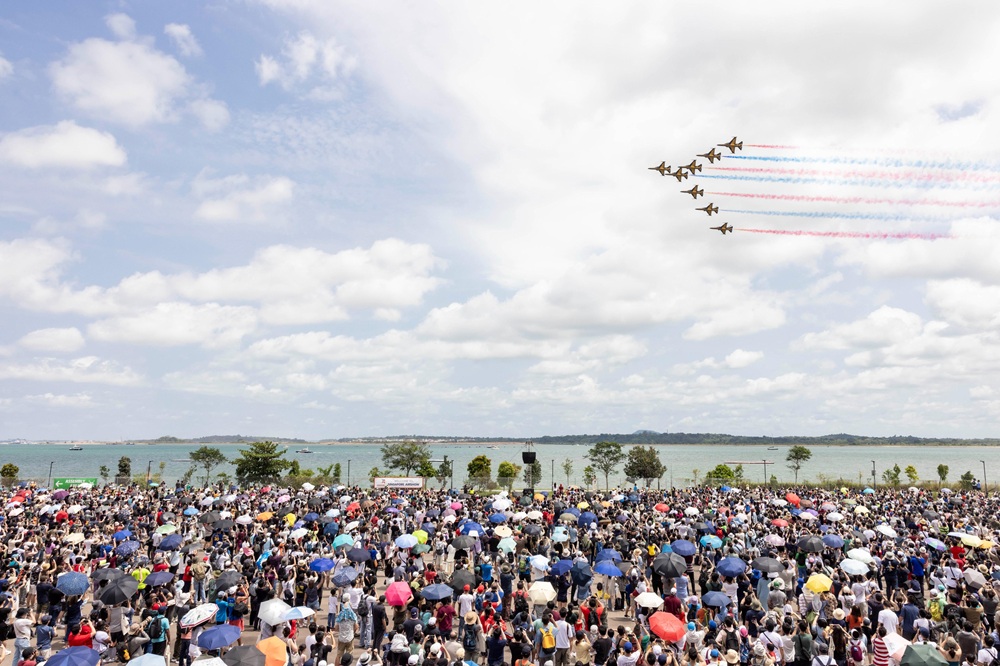
The announcement came during the two-day Space Summit on February 2-3 at Sands Expo and Convention Centre, coinciding with the Singapore Airshow from February 3-8. Dr. Tan highlighted Singapore’s strategic equatorial location for satellite operations, emphasizing applications in port management, urban planning, environmental monitoring, and food security.
The National Space Agency of Singapore (NSAS), under the Ministry of Trade and Industry (MTI), will centralize efforts previously led by the Economic Development Board’s Office for Space Technology & Industry (OSTIn). OSTIn’s 30 staff will transition, with headcount growing over five years to match the expanded mandate.
Veteran public servant Ngiam Le Na, deputy chief executive at DSO National Laboratories, will helm NSAS as chief executive. With 25 years in public service, including roles at the Defence Science and Technology Agency, Ms. Ngiam has driven satellite acquisitions for environmental monitoring, maritime security, and disaster relief.
NSAS will operate a multi-agency center for satellite tasking and geospatial analytics, co-own earth observation satellites with ST Engineering, and develop a regional satellite constellation. It prioritizes space situational awareness amid rising orbital congestion to safeguard assets.
Investment Surge Fuels Growth
Since 2022, the government has committed over S$200 million to space R&D, funding AI, robotics, climate tech, and microgravity health research. Recent top-ups, including S$60 million for the Space Technology Development Programme, support institutes and commercialization.
These investments build world-class R&D, attract 70 space firms and 2,000 professionals already in Singapore—from component manufacturing to satellite services. NSAS aims to lure more global players for Asian scaling.
NSAS will craft national space laws, evolving 2024 OSTIn guidelines on object registration, safety, and sustainability. Regulations will balance innovation, business growth, and high safety standards in a democratized space era.
Dr. Tan stressed Singapore’s strengths in manufacturing, aerospace, micro-electronics, precision engineering, and AI for space capture. International partnerships will expand, aiding firms in regional opportunities.
Singapore’s space journey began in 1971 with a Sentosa ground station, followed by the 1998 ST-1 communications satellite—a S$240 million SingTel-Chunghwa Telecom venture covering Southeast Asia to China. The first locally built satellite launched in 2011, with over 30 satellites deployed in 20 years via government, industry, and academia.
Milestones include ISRO collaborations for micro-satellites in 2011, 2014, and 2015. Today, ST Engineering plans four high-resolution equatorial satellites by 2030 and Nebula by mid-2026 for gigabit laser communications, enabling ultra-fast networks for broadband and secure data.
Global space investments hit records in 2025, per Seraphim Space, with further rises expected—prompting Singapore’s agency launch. As nations like the US push Mars ambitions, Asia’s “quiet revolution” gains traction, with Singapore eyeing equatorial advantages for disaster response and monitoring.
NSAS embodies more than tech—it’s about economic resilience, life improvement, and global challenges via precision innovation, Dr. Tan said. With 70 firms thriving, the agency cements Singapore’s role in a US$1.8 trillion market.
Industry Momentum at Summit
ST Engineering showcased at the summit, underscoring private-sector vitality. Ngee Ann Polytechnic announced space tech specialization, aligning education with needs. These steps signal ecosystem maturation.
NSAS will validate technologies, foster partnerships, and regulate responsibly, unlocking space for national-regional needs. As equatorial positioning enables unique contributions, Singapore transitions from participant to leader.
This initiative arrives amid airshow buzz, spotlighting aerospace-space synergy. With committed funding and expertise, NSAS propels Singapore skyward.