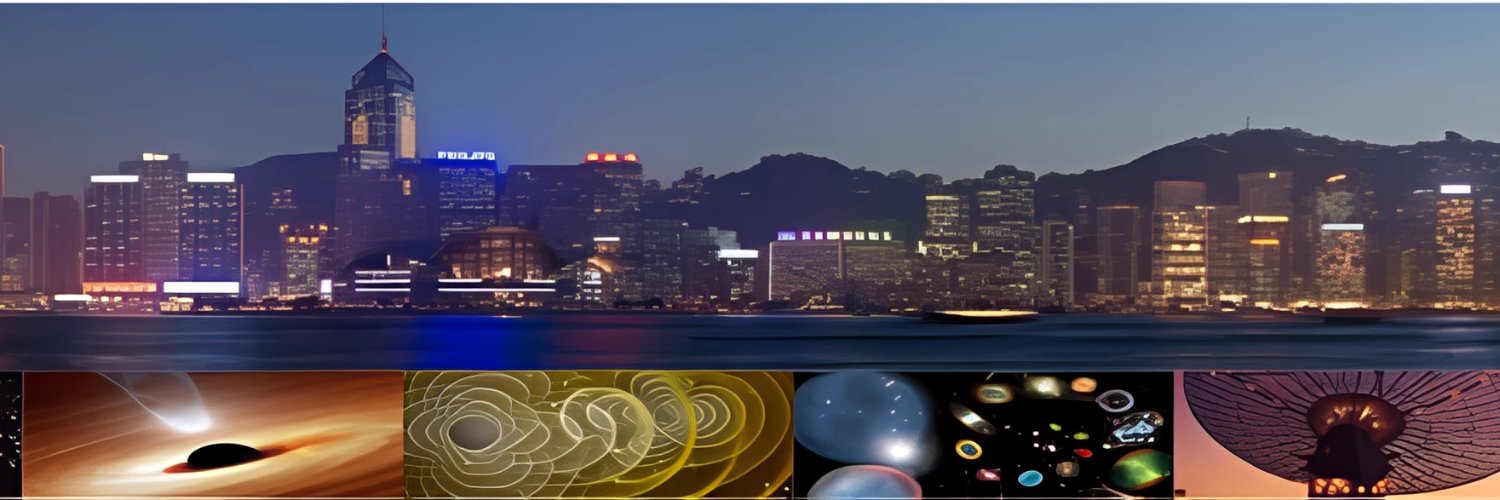

Hong Kong is poised to etch its name in the galaxy. For the first time, the city will host the Asia-Pacific Regional IAU Meeting (APRIM2026), billed as the “Olympics of Astrophysics and Space Science.” Scheduled for May 4–8 at the Hong Kong Convention and Exhibition Centre (HKCEC), this landmark gathering unites nearly 1,000 global experts, Nobel laureates, and pioneers to probe the universe’s deepest mysteries while tackling pressing sustainability challenges.
Organized by the International Astronomical Union (IAU)—a body representing over 13,000 astronomers from 85 countries—and spearheaded by the University of Hong Kong’s Laboratory for Space Research (LSR), APRIM2026 underscores Hong Kong’s ascent as a hub for “New Space” innovation. In an era where private ventures like SpaceX and Blue Origin democratize orbital access, the event bridges ivory-tower theory with practical applications, from black hole dynamics to satellite mega-constellations.
Professor Quentin Parker, APRIM2026 Chair and LSR Director, hailed the selection as a testament to Hong Kong’s prowess. “We’re thrilled to welcome the global astrophysics community to our city,” Parker said. “This platform showcases Hong Kong’s ‘New Space’ capabilities and ignites passion in the next generation of explorers.” Echoing this, Professor Xue Suijian, former Deputy Director of China’s National Astronomical Observatories, praised the city’s international vibe and excellence in deep-space probes, planetary science, and big data—positioning it as a vital bridge for East-West collaboration.
The conference agenda pulses with frontier topics: stellar evolution, cosmology, and the universe’s origins. Plenary sessions promise Nobel-level revelations, led by five luminaries including 2011 Nobel Laureate Prof. Brian Schmidt (IAU President-elect), 2021 Shaw Prize winner Prof. Victoria Kaspi (McGill University), and 2024 Shaw recipient Prof. Shri Kulkarni (Caltech). Other stars include Prof. Luis C. Ho (Kavli Institute for Astronomy and Astrophysics, Peking University), who views APRIM as a pivot from pure research to industry-driven “blue ocean” opportunities in the space economy.
A standout theme? Space sustainability. As low-Earth orbit swells with thousands of satellites—think Starlink’s sprawl—debris risks and light pollution threaten astronomical observations. Dedicated sessions will dissect these perils, advocating ethical stewardship. Prof. Ho emphasized the shift: “This meeting fosters Asia-Pacific ties, channeling high-tech for public good.” Public outreach, including youth workshops, aims to nurture a generation equipped for cosmic guardianship.
Hong Kong’s institutions amplify the buzz. Collaborators like HKUST, PolyU, and the Hong Kong Institute of Science & Innovation (Chinese Academy of Sciences) join forces. Sponsors include diamond backer The Shaw Prize, gold supporter Center for Space Utilization (CSU), and bronze patron Hong Kong (International) Aerospace Charitable Foundation. A constellation of backers— from UNOOSA and Japan’s NAOJ to India’s Satcom Industry Association—signals broad momentum.
Event Snapshot
- Dates & Venue: May 4–8, 2026; HKCEC (9 AM–6 PM daily)
- Highlights:
- Nobel/prize-winning plenaries on black holes, cosmic expansion.
- ESG-focused talks on space debris, interference.
- Industry-academia bridges for sustainable tech.
- Key Speakers:
- Prof. Brian Schmidt: 2011 Nobel Laureate; IAU President-elect;
- Prof. Victoria Kaspi: 2021 Shaw Prize Laureate; Professor, McGill University
- Prof. Matthew Bailes: 2023 Shaw Prize Laureate; Professor, Swinburne University of Technology
- Prof. Shri Kulkarni: 2024 Shaw Prize Laureate; Professor, Caltech
- Prof. Luis C. Ho, Director of the Kavli Institute for Astronomy and Astrophysics at Peking University
- Prof. Yang Gao: Co-Director of Space Science and Technology Institute, Hong Kong University of Science and Technology
- Dr. Xuejun Zhang, Academician of the Chinese Academy of Engineering; The President of Changchun Institute of Optics Fine Mechanics and Physics (CIOMP), Chinese Academy of Sciences
- Prof. Qiang Wang, Director of Technology and Engineering, Center for Space Utilization, Chinese Academy of Sciences (CSU)
This debut cements Hong Kong’s STEM stature amid China’s space surge—think Tiangong station and lunar ambitions—while fostering global ties. As Parker puts it, APRIM2026 isn’t just a conference; it’s a launchpad for discovery.
For details, visit IAU or LSR. Register soon—spots for this celestial summit are orbiting fast.