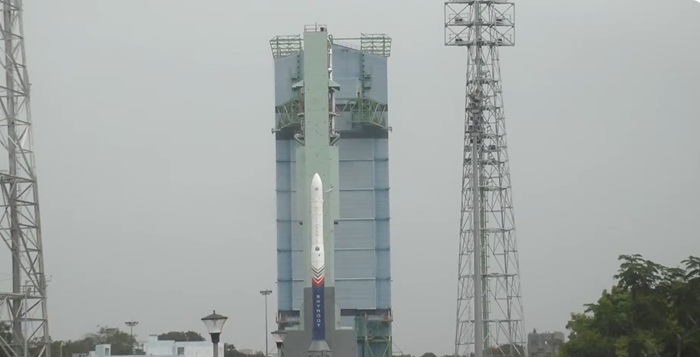
At 12:05 pm on July 18, 2026, a slender four-stage rocket named Vikram-1 thundered skyward from Sriharikota, etching a new chapter in India’s space narrative. Dubbed “Mission Aagaman” (meaning “arrival”), the launch was not just a technical triumph for Hyderabad-based Skyroot Aerospace, but a symbolic arrival of India’s private space industry into the global orbital launch arena.
A Historic Liftoff: Mission Aagaman
The maiden flight of Vikram-1 cleared the launch pad after a brief “planned hold” to address apparent navigation issues, a routine precaution in any debut mission. Once airborne, the rocket executed a textbook ascent, leaving behind a trail of orange smoke before sequentially deploying its payloads into a 450 km Low Earth Orbit (LEO).
The mission carried six payloads, blending serious technology demonstrators with symbolic tributes. Among these were in-orbit tests for robotic debris-removal arms (Cosmoserve’s EMBRACE), a compact satellite by Grahaa Space called Solaras, and Skyroot’s own SCOPE experimental payload. Also aboard was a micro-art payload: an 18-karat gold rocket carrying micro-sculptures of three scientific icons—Vikram Sarabhai, Sir CV Raman, and APJ Abdul Kalam—honouring the visionaries after whom Skyroot’s rockets and engines are named.
Adding a human dimension, Mission Aagaman carried a handwritten postcard from Prime Minister Narendra Modi, bearing the message “Vande Mataram,” along with hundreds of postcards from engineers, scientists, and even schoolchildren who had sent in their wishes for India’s private space dream.

Engineering Firsts: India’s Carbon-Composite Orbital Rocket
Vikram-1 is a compact, four-stage, expendable small-lift launch vehicle, standing seven storeys tall. Its design is a mosaic of Indian engineering innovations, many of which are national firsts.
All-carbon composite structure: Vikram-1 is India’s first orbital rocket built with an all-carbon composite airframe, making it lighter and stronger than traditional steel-based designs.
3D-printed orbital engine: The fourth stage liquid engine is 100% 3D-printed, a first for an Indian orbital launch vehicle, showcasing advanced manufacturing capabilities.
Monolithic carbon stage: The first stage is the country’s longest monolithic carbon-composite rocket stage, an achievement in indigenous materials engineering.
Ultra-low-shock separation: Vikram-1 employs an advanced pneumatic system for stage and fairing separation, a first-of-its-kind technology in India’s launch ecosystem to reduce stress on delicate payloads.
Together, these features are not just technical bragging rights; they are crucial enablers for reliable, cost-effective access to space, especially for small satellites.
The Skyroot Story: From ISRO Scientists to Space Entrepreneurs
Skyroot Aerospace was founded in 2017 by Pawan Kumar Chandana and Naga Bharath Daka, both former ISRO scientists with deep experience in launch vehicle design. Their vision was simple yet audacious: to build India’s first privately developed orbital rocket and open the door for commercial satellite launches from Indian soil.
The company cut its teeth with the Vikram-S, a suborbital test vehicle that successfully flew in 2022 under ISRO’s IN-SPACe framework, proving that private players could access national launch infrastructure. That mission, though not orbital, was a vital stepping stone, allowing Skyroot to refine its guidance, navigation, and control systems before attempting orbit.
With Mission Aagaman, Skyroot transitioned from suborbital testbeds to full orbital capability, demonstrating not just rocket performance but also the ability to integrate and deploy multiple payloads—a prerequisite for commercial operations.
Symbolism in Orbit: Art, Diamonds, and National Pride
Mission Aagaman was as much about national symbolism as it was about engineering. The gold micro-rocket payload, crafted as a tribute to India’s scientific heritage, fused art and aerospace in a way rarely seen in orbital missions. Similarly, Cosmic Bloom—a lab-grown diamond from Cosmos Diamonds—flew as an “artistic payload,” blending commercial access to space with cultural expression.
The inclusion of Prime Minister Modi’s handwritten message, along with postcards from hundreds of citizens, turned the mission into a national event, linking the ambitions of a startup with the dreams of a billion people. For many, seeing a private Indian rocket carry the PM’s “Vande Mataram” into orbit was a moment of collective pride, akin to the early days of ISRO’s own breakthroughs.
Global Implications: India Joins the Private Launch Club
With Vikram-1’s success, India becomes the fourth country—after the US, New Zealand (via US companies), and China—to host a successful privately developed orbital launch. This positions India as an emerging player in the fast-growing small satellite launch market, estimated to be worth billions in the coming decade.
For global customers, Skyroot offers a compelling value proposition: reliable, cost-effective access to LEO from a geopolitically stable partner with a proven space infrastructure. The ability to piggyback multiple payloads on a single launch, as demonstrated by Mission Aagaman, further enhances Vikram-1’s commercial appeal.
ISRO’s support, through access to Sriharikota’s launch facilities and Mission Control, underscores a strategic shift: from a monopoly on orbital launches to a role as an enabler and regulator of private space activity. This public-private partnership model could accelerate India’s emergence as a global launch hub, much like the US model that nurtured SpaceX and Rocket Lab.

What’s Next for Skyroot and Vikram-1?
The data from Mission Aagaman will now be meticulously analysed to validate Vikram-1’s guidance, navigation, and stage-separation systems. This engineering feedback loop is critical for refining the rocket for future commercial missions, where reliability and repeatability are paramount.
Skyroot has indicated that the next phase will involve more frequent launches, targeting dedicated satellite deployments for both Indian and international customers. The company is also exploring upgrades to Vikram-1, including potential reusability features and higher payload capacities, to stay competitive in a crowded global market.
For India’s burgeoning NewSpace ecosystem, Vikram-1’s success is a catalyst. It signals to investors, engineers, and policymakers that private orbital launches are not just feasible but profitable, potentially unlocking a wave of innovation in satellite manufacturing, in-orbit services, and space logistics.
A New Chapter for Indian Space
Vikram-1 marked the arrival of a new era—one where India’s space ambitions are no longer the sole domain of a government agency but a shared national enterprise, driven by startups, entrepreneurs, and a new generation of space engineers.
For Skyroot Aerospace, Mission Aagaman is both a culmination and a beginning: the culmination of nearly a decade of grassroots engineering, and the beginning of India’s journey as a credible, commercial player in the global orbital launch market. For the nation, it is a reminder that the stars are no longer out of reach—they are within the grasp of those bold enough to build the rockets that will take them there.