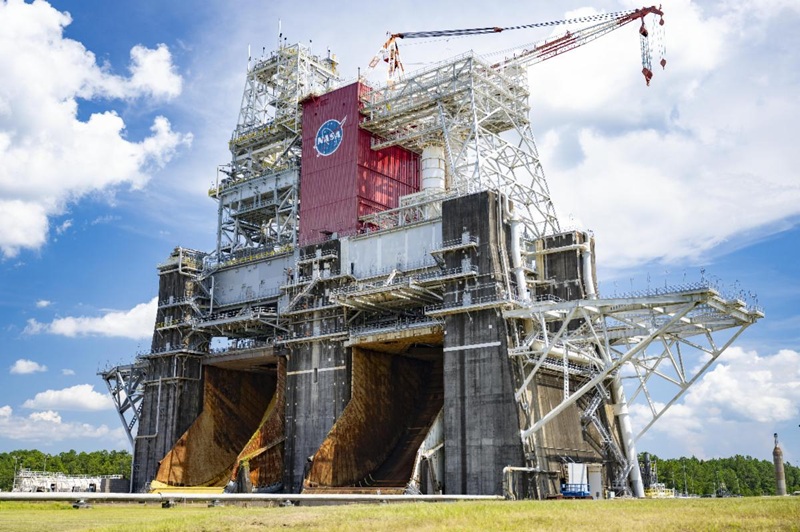
Bay St. Louis, Miss. — NASA and Blue Origin have struck an agreement to conduct second-stage hot fire testing of the private company’s New Glenn rocket at the agency’s historic B-2 test stand at Stennis Space Center, agency officials announced Friday. The tests, targeted to begin this fall, represent a deeper operational partnership between the federal space agency and a leading commercial launch provider as NASA prepares for its next wave of Artemis lunar missions.
The pact, formalized as an annex to a reimbursable Space Act Agreement signed earlier this month, commits NASA to provide engineers, infrastructure and technical expertise to ready the B-2 stand for New Glenn’s upper-stage testing. Blue Origin will bring its propulsion hardware—the second stage powered by two BE‑3 engines burning liquid hydrogen and liquid oxygen—to be fired on a stand that traces its pedigree to the Apollo era.
“Stennis continues to be a hub for the commercial space industry,” said U.S. Sen. Roger Wicker, noting the economic and strategic benefits to Mississippi of hosting the tests. Senators Cindy Hyde-Smith and Representative Mike Ezell, whose districts include the Gulf Coast facility, also hailed the deal as a win for local jobs and for U.S. leadership in space.
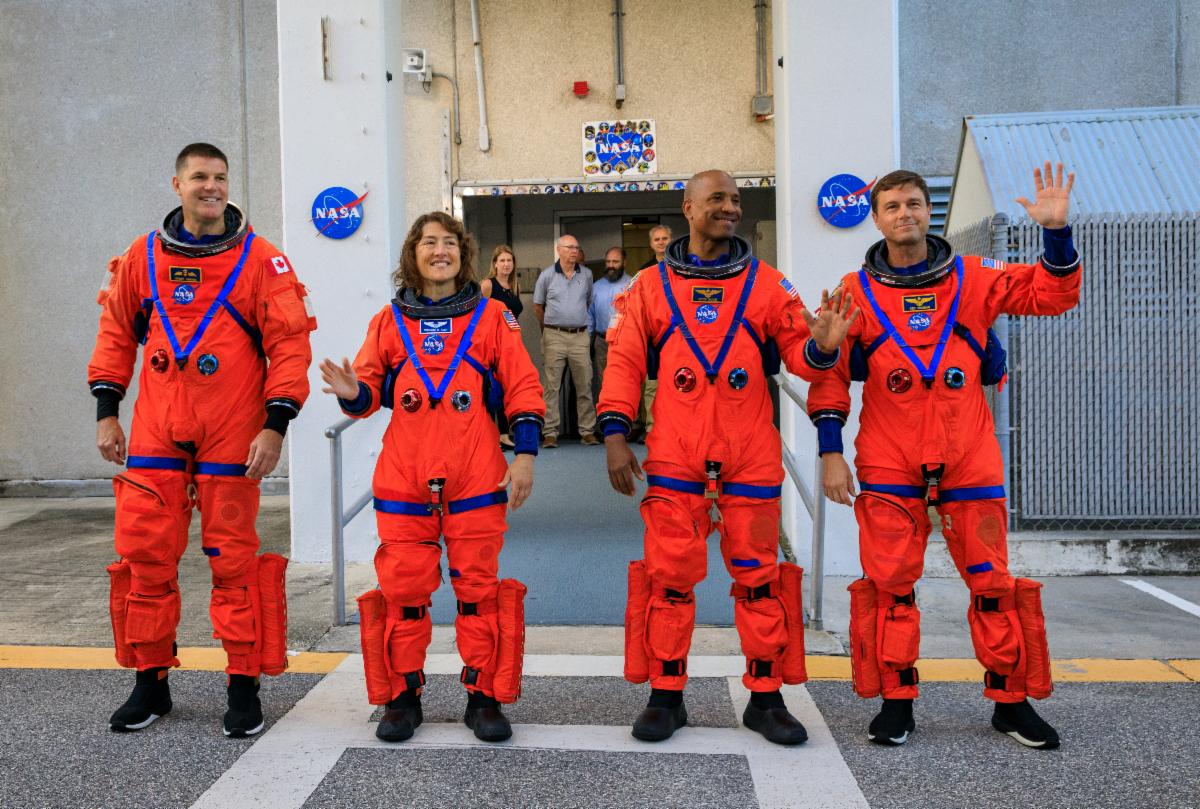
“The success of Artemis II has roots at NASA Stennis, and I’m excited about the prospect of Blue Origin establishing a rigorous test program in Mississippi as part of future American crewed missions to the Moon and beyond,” Hyde-Smith said. “I hope its use of B-2 test stand becomes a long-term arrangement that broadens our state’s contribution to space exploration.”
Ezell framed the agreement as both an economic boost and a technological vote of confidence in Stennis’ capabilities. “The world-class capabilities at the B-2 test stand will help advance the next generation of rocket propulsion while supporting high-skilled jobs and strengthening our nation’s leadership in space exploration,” he said.
NASA Administrator Jared Isaacman described the partnership as central to agency strategy as it scales toward human missions on the lunar surface and eventual crewed missions to Mars. “Winning the new space race means moving faster and working alongside a strong commercial industry,” Isaacman said in a statement. “Supporting Blue Origin at NASA’s Stennis Space Center puts world-class American infrastructure to work advancing the capabilities needed to return astronauts to the Moon, establish a sustained lunar presence, and prepare for Mars.”
The agreement comes as NASA moves from demonstration flights to sustained operations under Artemis, a campaign that will require coordination between government assets and commercial partners. Artemis II, which returned crews to deep-space operations earlier this year, relied in part on testing at Stennis, and Artemis III will depend on a complex, multi-launch choreography that pairs NASA’s Orion crew vehicle with commercial human landing systems built by Blue Origin and SpaceX.
Blue Origin says New Glenn will be part of that commercial launch landscape and will also be used to loft missions that support lunar surface operations. Company CEO Dave Limp framed the Stennis testing as a revival of a long-standing American capability: “Stennis helped take Americans to the Moon, and through this partnership, it will help take us back,” he said.
Under the terms of the arrangement, NASA will supply the onsite workforce and facilities needed to design, build and install modifications and test articles for the B-2 stand to accommodate New Glenn’s second-stage hot fires. Agency personnel will also provide dedicated workspace at Stennis and will share lessons from prior propulsion tests conducted there, officials said.
The B-2 stand has a storied history. Built to test Saturn V stages for the Apollo moon shots, it later hosted a full Green Run test series of the Space Launch System (SLS) core stage ahead of the Artemis I mission. Blue Origin’s upper-stage testing on B-2 will mark the stand’s continued reuse for missions that tie into NASA’s lunar plans.
Technically, New Glenn’s second stage is powered by two BE‑3 engines that produce about 200,000 pounds of thrust each in vacuum, using liquid hydrogen and liquid oxygen propellants. Hot fire testing on Stennis will validate the stage’s performance and ground-support procedures ahead of flight campaigns that could include launches in support of lunar delivery or orbital assembly tasks.
The tests also align with NASA’s broader goals to accelerate commercial capabilities that reduce risk for crewed missions. In May, NASA named Blue Origin among providers receiving contracts to help build sustained operations on the Moon, including an award for a robotic mission this fall using Blue Origin’s Blue Moon Mark 1 Endurance lander. That mission is slated to deliver NASA payloads to the Shackleton Connecting Ridge near the lunar South Pole, a site planners have prioritized as crews return for Artemis IV and V in 2028.
Officials stressed that the Stennis agreement is reimbursable: Blue Origin will pay NASA for agency services, a common arrangement designed to leverage federal infrastructure while keeping development costs on private partners. The partnership is also a tangible example of NASA’s policy stance that a strong commercial sector can advance national exploration goals faster than government-only programs.
Industry analysts said the move underscores a maturing relationship between legacy government test facilities and new commercial launch systems. By offering the expertise and scale of Stennis, NASA helps shorten validation timelines for complex propulsion systems while maintaining oversight and preserving institutional knowledge from decades of rocket testing.
For the Gulf Coast’s aerospace workforce, the agreement promises near-term work preparing the B-2 stand and carrying out the planned hot fires, with potential for longer-term collaboration if testing routines expand. Local officials and lawmakers said they will push to cement continued use of the facility by private firms.
The formal start date for the hot fire campaign has not been announced beyond a target window of this fall. NASA and Blue Origin said they would release more detailed timelines as integration and stand-preparation work advances.